- -1,00 €
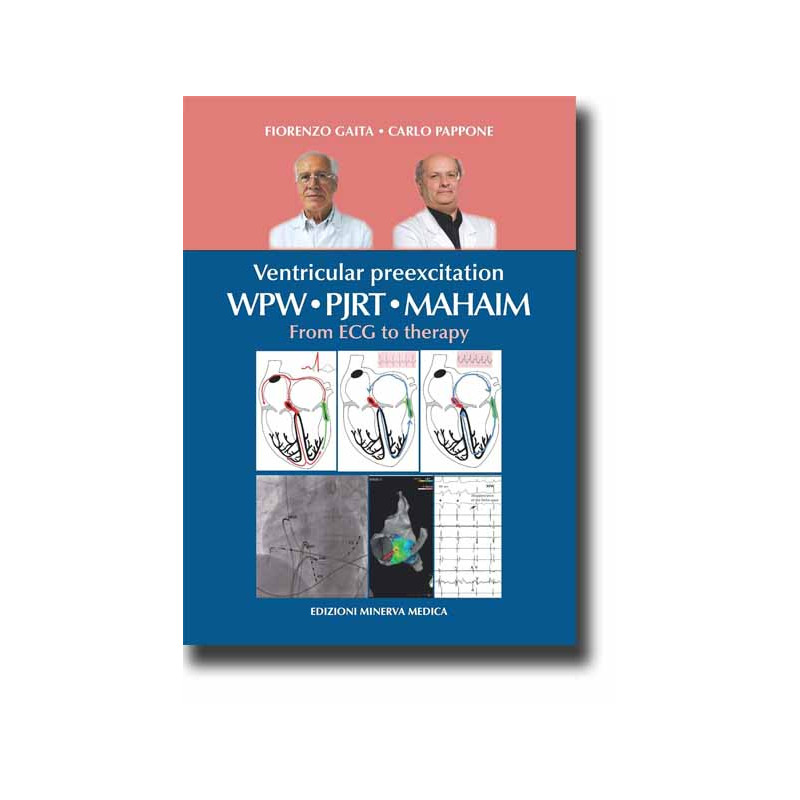
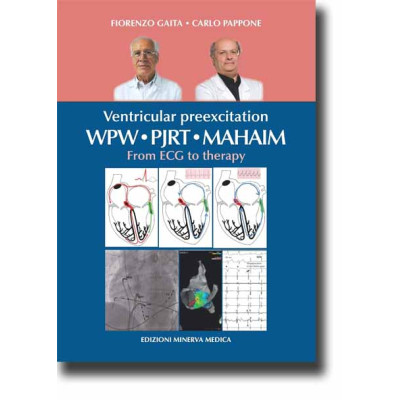





The term “preexcitation” indicates the premature activation of a portion of myocardium by an impulse traveling an anomalous pathway, able to conduct electrical impulses faster than the normal conduction pathways. Usually such anomalous, accessory pathways connect the atria to the ventricles and allow an impulse originated in one chamber (atrium or ventricle) to reach the other without the physiological delay elicited by the atrioventricular node. The accessory pathways are constituted in most cases by fast, sodium-dependent fibers with rapid conduction capacity. Differently, the atrioventricular node is constituted by calcium-dependent fibers with a slow conduction capacity. The term “preexcitation” is not a synonymous of “ventricular preexcitation”: in fact, in the presence of an accessory pathway, the atria can be pre-excited by an impulse originating from the ventricles without any effect on the ventricular activation. Cardiac preexcitation Localization of the accessory pathway at surface ECG Arrhythmias in preexcitation The endocavitary electrophysiological study How to identify patients at risk Therapy of arrhythmic episodes Accessory pathway ablation Permanent junctional reciprocating tachycardia (PJRT) or Coumel tachycardia Mahaim fiber tachycardia Clinical Cases

Scheda tecnica
Ideal for students and as a review for practicing clinicians, Goldberger's Clinical Electrocardiography explains the fundamentals of ECG interpretation and analysis, helping facilitate an understanding of rhythm disorders and the relevant clinical outcomes. The authors take readers through the nuts and bolts of ECG, using Dr. Ary Goldberger’s award-winning teaching style to clarify complex concepts in an easy-to-read manner. You'll learn simple waveform analysis and beyond to present ECGs as they are used in hospital wards, outpatient clinics, emergency departments, and most especially intensive care units - where the recognition of normal and abnormal patterns is the starting point in patient care.
... L’unico modo per imparare questa “arte” è osservare criticamente più e più volte centinaia di tracciati al fine di riconoscere i quadri di presentazione delle diverse alterazioni dell’elettrocardiogramma, soprattutto quando sono espressione di patologie cardiache che richiedono un intervento terapeutico tempestivo. Questo manuale soddisfa appieno queste necessità in quanto
accompagna, in un percorso di semplice e agevole lettura, lo studente o il medico che voglia apprendere o approfondire le
conoscenze di elettrocardiografia, indipendentemente dal livello individuale iniziale...
A companion to Brazunwald's Heart Diseases
Part of the renowned Braunwald family of references, Acute Coronary Syndromes, Second Edition: A Companion to Braunwald’s Heart Disease provides the tools and knowledge you need for effective diagnosis, evaluation, and management of patients with acute coronary syndrome. Concise and easy to use, this fully revised volume explores the most recent tools for diagnosis and therapeutic decision-making, as well as the full range of available management strategies, providing outcomes data for each strategy. This book also includes regular updates with late-breaking clinical trials, reviews of important new articles, and the latest guidance on clinical practice, all selected and masterfully edited by Dr. Eugene Braunwald.
A companion to Braunwald's Heart Disease
Thoroughly updated for its Third Edition, this best-selling manual is a practical guide to the performance, interpretation, and clinical applications of echocardiography. The Echo Manual is written by recognized authorities at the Mayo Clinic and provides a concise, user-friendly summary of techniques, diagnostic criteria, and quantitative methods for both echocardiography and Doppler echocardiography. Discussion of each clinical problem also includes transesophageal echocardiography.
This edition covers the latest techniques, standards, and applications and includes new contrast agents. All references have been updated. More than 900 images—well annotated and true to gray scale and color—give readers an immediate grasp of salient points.
Dalla Presentazione: "I tracciati elettrocardiografici vengono prima mostrati nell’aspetto nativo e successivamente le anomalie vengono allargate ed evidenziate nei colori e descritte con un breve testo. È un metodo didatticamente efficace, che non solo porta subito il lettore nel “cuore” della patologia, ma focalizzando ed evidenziando gli aspetti elettrocardiografici caratteristici lo rendono, in breve tempo, in
grado di applicare nella pratica clinica quanto appreso."
Ideal for cardiologists who need to keep abreast of rapidly changing scientific foundations, clinical research results, and evidence-based medicine, Braunwald’s Heart Disease is your indispensable source for definitive, state-of-the-art answers on every aspect of contemporary cardiology. It helps you apply the most recent knowledge in personalized medicine, imaging techniques, pharmacology, interventional cardiology, electrophysiology, and much more!
ECG Notes. Guida all'interpretazione e alla gestione clinica ECG Notes. Guida all'interpretazione e alla gestione clinica 4Ed.