- -4,00 €
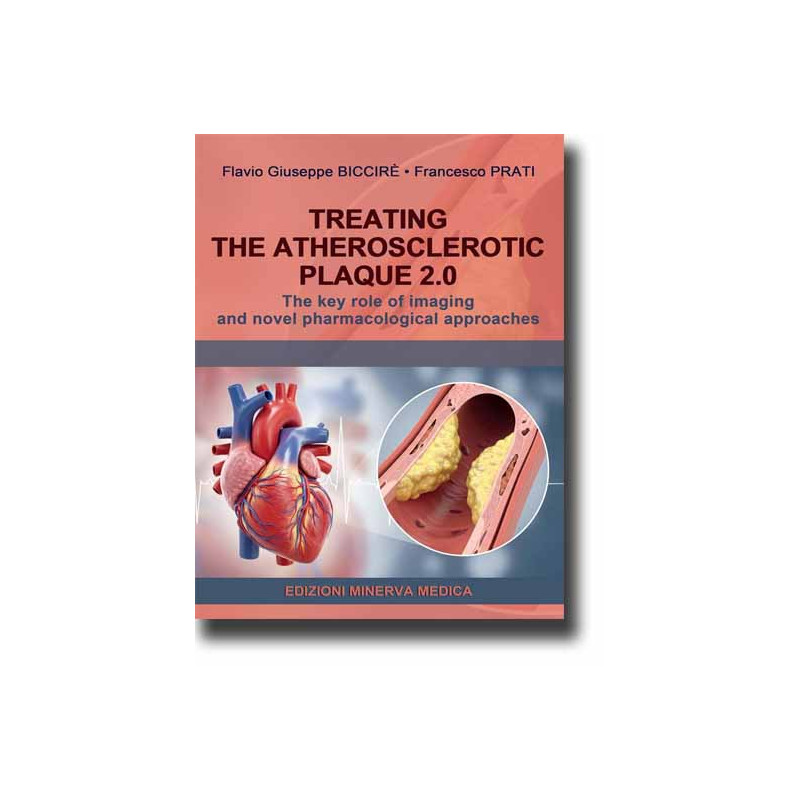





Atherosclerotic cardiovascular disease remains the leading cause of death worldwide, yet our understanding of its biology has evolved more profoundly in the past two decades than in the previous fifty years. Traditional paradigms centred on established clinical scores, ischaemia and flow-limiting stenoses have undoubtedly shaped modern cardiology, but they increasingly revealed intrinsic limitations. Most myocardial infarctions originate from non-obstructive, biologically active plaques that progress silently long before clinical manifestation, and first events frequently occur in individuals classified as low risk by conventional assessment tools. This textbook embraces a modern vision of coronary artery disease, integrating advanced mechanistic knowledge, emerging risk factors, state-of-the-art imaging and contemporary pharmacological strategies to elucidate the underpinnings of modern clinical management of atherosclerosis, from understanding of traditional and non-traditional plaque progression risk factors to defining how these processes can be favourably haltered through targeted interventions. Through contributions from leading experts in cardiovascular medicine, Treating the Atherosclerotic Plaque 2.0 provides a comprehensive and up-to-date synthesis of the groundbreaking evidence that has reshaped our understanding, management and treatment of atherosclerosis. Non-invasive imaging modalities such as coronary computed tomography angiography quantify the burden and phenotype of disease across the entire coronary tree, while intracoronary techniques including IVUS, NIRS and OCT allow for near-histological assessment of plaque composition, inflammation and microstructure. These tools have transformed our capacity to refine risk, identify high-risk individuals and guide therapeutic intensification. Clinical and mechanistic imaging trials have established an almost continuous log-linear association between on-treatment LDL-cholesterol levels and reductions in major cardiovascular events, paralleled by regression of atheroma burden and stabilisation of plaque morphology. Moreover, renewed focus on novel lipid-related biomarkers and residual inflammatory risk is shaping the next frontier of preventive cardiology, offering additional avenues to further reduce the residual risk. This textbook offers clinicians, researchers and trainees a rigorous and practical roadmap to navigate this paradigm shift - from relying only on traditional clinical scores and ischaemia to detecting, characterising and actively modifying atherosclerotic disease. The emerging role of cardiovascular imaging in the management of atherosclerotic coronary artery disease The role of non-invasive imaging to improve risk stratification and guide therapeutic approaches Dyslipidaemias: early diagnosis, risk management and improved outcomes Oral lipid-lowering therapy: the lower, the better with established and novel pharmacological opportunities Strike early, strike strong: rationale for early intensive lipid-lowering therapy in ACS patients Atherosclerotic plaque regression and stabilisation with intensive lipid-lowering therapy Atherosclerotic vulnerable or high-risk plaque: role of invasive treatment Beyond LDL-C lowering: addressing the residual risk Atherosclerosis and atrial fibrillation: a dangerous relationship The relationship between healthcare professionals’ contribution and improvement in cardiovascular patient care and outcomes

Scheda tecnica
The purpose of this book is to assess the efficacy of the Nellix endoprosthesis in the treatment of patients with AAA, underlining the characteristics, the modalities of implantation, all the possible indications according to the IFUs suggested by the manufacturer and outside the same, the limits related to the implant and the monitoring procedures during the follow-up of the treated patients. Only long-term results will allow a complete and definitive assessment on the real possibilities of use of Nellix, but the data collected from the current experiences of the single centers and those of the trials are very encouraging and promising for an adequate and safe use of this endoprosthesis in the treatment fo aortic aneurismal disease.
Con elementi di neurosonologia ed altre metodiche
Società Italiana di Diagnostica Vascolare SIOV-GIUV
1.Encefalo. 2.Testa e collo. 3.Colonna vertebrale. 4.Torace. 5.Addome. 6.Rene. 7.Arto superiore / inferiore
L’angioplastica primaria è la pietra miliare del trattamento dell’infarto miocardico acuto. La terapia antitrombotica a breve e lungo termine, modulata sul bilanciamento del rischio ischemico ed emorragico del singolo paziente è altrettanto importante ai fini dell’outcome clinico. La tecnica e la strategia di rivascolarizzazione soprattutto in caso di malattia multivasale, anche con l’utilizzo delle moderne metodiche di imaging e di valutazione funzionale intracoronariche, sono anch’esse elementi chiave di questo complesso processo terapeutico dalla cui migliore gestione può derivare il risultato clinico ottimale per il paziente.
Treatment of Varicose and Telangiectatic Leg Veins
Both in print and online, this classic resource by Drs. Mitchel P. Goldman, Robert A Weiss, and Jean-Jerome Guex provides highly practical, up-to-date guidance for the effective management of varicose veins and other vascular anomalies. It is an indispensable reference for a wide audience including dermatologists, invasive radiologists, family practitioners, vascular and cosmetic surgeons. Clearly written by global experts, Sclerotherapy, 6th Edition, helps those new to the field to gain a firm understanding of successful techniques, as well as showing seasoned practitioners how to improve and hone their skills with today’s best and newest approaches.