- -165,00 €

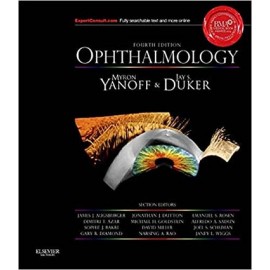





Table of Contents:
Part 1: Genetics
1.1 Fundamentals of Human Genetics
1.2 Molecular Genetics of Selected Ocular Disorders
1.3 Genetic Testing and Genetic Counseling
Part 2: Optics and Refraction
2.1 Visible light
2.2 Physical optics for clinicians
2.3 Light Damage to the Eye
2.4 Principles of lasers
2.5 Optics of the normal eye
2.6 Testing of Refraction
2.7 Contact lenses
2.8 Ophthalmic Instrumentation
2.9 Perspectives on aberrations of the eye
Part 3: Refractive Surgery
3.1 Current concepts, classification, and history of refractive surgery
3.2 Preoperative evaluation for refractive surgery
3.3 Excimer laser photorefractive keratectomy
3.4 Laser Subepithelial Keratomileusis (LASEK) and Epi-LASIK
3.5 LASIK
3.6 Wavefront-based Excimer Laser Refractive Surgery
3.7 Phakic Intraocular Lenses
3.8 Astigmatic and Radial Incisional Keratotomy
3.9 Intrastromal corneal ring segments and collagen crosslinking
3.10 Surgical correction of presbyopia
Part 4: Cornea and Ocular Surface Diseases
Section 1: Basic Principles
4.1 Corneal Anatomy, Physiology and Wound Healing
4.2 Corneal Topography and Wave Front Imaging
Section 2: Congenital Abnormailities
4.3 Congenital Corneal Abnormailities
Section 3: External Diseases
4.4 Blepharitis
4.5 Herpes Zoster Ophthalmicus (HZO)
Section 4: Conjunctival Diseases
4.6 Conjunctivitis: infectious and non-infectious
4.7 Allergic Conjunctivitis
4.8 Tumors of Conjunctiva and Cornea
4.9 Pterygium and Conjunctival Degenerations
4.10 Ocular Cicatricial Pemphigoid/Mucous Membrane Pemphigoid
Section 5: Scleral and Episcleral Diseases
4.11 Episcleritis and Scleritis
Section 6: Corneal Diseases
4.12 Bacterial Keratitis
4.13 Fungal Keratitis
4.14 Parasitic Keratitis
4.15 Herpes Simplex Keratitis
4.16 Peripheral ulcerative keratitis
4.17 Noninfectious Keratitis
4.18 Keratoconus and other Ectasias
4.19 Anterior Corneal Dystrophies
4.20 Stromal Corneal Dystrophies
4.21 Corneal Endothelium
4.22 Corneal Degenerations
4.23 Dry Eye
Section 7: Misc.
4.24 Contact Lens-Related Complications
4.25 Corneal and External Eye Manifestations of Systemic Disease
Section 8: Trauma
4.26 Acid and Alkali Burns
Section 9: Surgery
4.27 Corneal Surgery
4.28 Excimer Laser Treatment of Corneal Pathology
4.29 Conjunctival Surgery
4.30 Endothelial Keratoplasty: Targeted treatment for corneal endothelial dysfunction
4.31 Surgical Ocular Surface Reconstruction
4.32 Management of Corneal Thinning, Melting, and Perforation
Part 5: The Lens
5.1 Basic science of the lens
5.2 Evolution of Intraocular Lens Implantation
5.3 Patient Work-up for Cataract Surgery
5.4 Indications for lens surgery/Indications for application of different lens surgery techniques
5.5 The pharmacotherapy of cataract surgery
5.6 Anesthesia for cataract surgery
5.7 Phacoemulsification
5.8 Refractive aspects of cataract surgery
5.9 Small incision cataract surgery and femtosecond laser
5.10 Manual cataract extraction
5.11 Combined procedures
5.12 Cataract surgery in complicated eyes
5.13 Pediatric cataract surgery
5.14 Complications of cataract surgery
5.15 Outcomes of cataract surgery
5.16 Secondary Cataract
5.17 Epidemiology, Pathophysiology, Causes, Morphology and Visual Effects
Part 6: Retina and Vitreous
Section 1: Anatomy
6.1 Structure of the neural retina
6.2 Retinal pigment epithelium
6.3 Retinal and choroidal circulation
6.4 Vitreous anatomy and pathology
Section 2: Ancillary Tests
6.5 Contact B-Scan Ultrasonography
6.6 Fluorescein Angiography and Indocyanine Green Angiography
6.7 Optical Coherence Tomography
6.8 Electrophysiology
Section 3: Basic Principles of Retinal Surgery
6.9 Light and Laser Injury
6.10 Scleral Buckling Surgery
6.11 Vitrectomy
6.12 Intravitreal injections and medication implants
Section 4: Dystrophies
6.13 Progressive and "stationary" inherited retinal degenerations
6.14 Macular dystrophies
6.15 Choroidal dystrophies
6.16 Hereditary vitreoretinopathies
Section 5: Vascular Disorders
6.17 Hyertensive retinopathy
6.18 Retinal Arterial Obstruction
6.19 Venous occlusive disease of the retina
6.20 Retinopathy of prematurity
6.21 Diabetic retinopathy
6.22 Ocular ischemic syndrome
6.23 Hemoglobinopathies
6.24 Coats’ Disease and Retinal Telangiectasia
6.25 Radiation retinopathy and papillopathy
6.26 Proliferative retinopathies
6.27 Retinal arterial macroaneurysms
Section 6: Macular Disorders
6.28 Age-related macular degeneration
6.29 Secondary Causes of Choroidal Neovascularization: Conditions Associated with Breaks in Bruch’s Membrane
6.30 Central Serous Chorioretinopathy
6.31 Macular Hole
6.32 Epiretinal membrane
6.33 Vitreomacular traction syndrome
6.34 Cystoid macular edema
6.35 Coexistent optic nerve and macular abnormalities
Section 7: Retinal Detachment
6.36 Peripheral retinal lesions
6.37 Retinal breaks
6.38 Rhegmatogenous retinal detachment
6.39 Serous detachments of the neural retina
6.40 Choroidal hemorrhage
6.41 Proliferative vitreoretinopathy
Section 8: Trauma
6.42 Posterior Segment Ocular Trauma
6.43 Distant trauma with posterior segment effects
6.44 Retinal Toxicity of Systemically Administered Drugs
Part 7: Uveitis and Other Intraocular Inflammations
Section 1: Basic Principles
7.1 Anatomy of the uvea
7.2 Mechanisms of uveitis
7.3 General approach to the uveitis patient and treatment strategies
Section 2: Infectious Causes of Uveitis--Viral
7.4 Herpes and other viral infections
7.5 Ocular infections with cytomegalovirus (CMV)
Section 3: Infectious Causes of Uveitis--Bacterial
7.6 Syphilitic and other spirochetal uveitis
7.7 Tuberculosis, leprosy and brucellosis
7.8 Cat scratch and Whipple’s disease: Bartonella-related infectious uveitis
7.9 Endophthalmitis
Section 4: Infectious Causes of Uveitis--Fungal
7.10 Histoplasmosis
7.11 Fungal Endophthalmitis
Section 5: Infectious Causes of Uveitis--Protozoal and Parasitic
7.12 Ocular toxoplasmosis
7.13 Posterior parasitic uveitis
Section 6: Uveitis Associated With Systemic Disease
7.14 Uveitis related to HLA-B27
7.15 Sarcoidosis
7.16 Behçets disease
7.17 Vogt-Koyanagi-Harada disease
Section 7: Traumatic Uveitis
7.18 Phacogenic uveitis
7.19 Sympathetic uveitis
Section 8: Uveitis of Unknown Causes
7.20 Idiopathic and other anterior uveitis syndromes
7.21 Pars planitis and other intermediate uveitis
7.22 Posterior Uveitis of Unknown Cause-White Spot Syndromes
Section 9: Masquerade Syndromes
7.23 Masquerade Syndromes: Neoplasms
Part 8: Intraocular Tumors
Section 1: Malignant and Intraocular Tumors
8.1 Retinoblastoma
8.2 Uveal Melanoma
8.3 Metastatic Cancer to the Eye
8.4 Lymphoma and Leukemia
8.5 Medulloepithelioma
Section 2: Benign Intraocular Tumors
8.6 Uveal Nevus
8.7 Choroidal Hemangiomas
8.8 Choroidal Osteoma
8.9 Astrocytoma of Retina
8.10 Hemangiomas of Retina
8.11 Combined Hamartoma of Retina
8.12 Hypertrophy of Retinal Pigment Epithelium
Section 3: Phakomatoses
8.13 Phakomatoses
Part 9: Neuro-ophthalmology
Section 1: Imaging in Neuro-Ophthalmology
9.1 Principles of imaging in neuro-ophthalmology
9.2 Optical coherence tomography in neuro-ophthalmology
Section 2: The Afferent Visual System
9.3 Anatomy and physiology
9.4 Differentiation of Optic Nerve from Macular Retinal Disease
9.5 Congenital optic disc anomalies
9.6 Papilledema and raised intracranial pressure
9.7 Inflammatory optic neuropathies and neuroretinitis
9.8 Ischemic Optic Neuropathies
9.9 Hereditary, nutritional, and toxic optic atrophies
9.10 Prechiasmal pathways - compression by optic nerve and sheath tumors
9.11 Traumatic optic neuropathies
9.12 Optic chiasm, parasellar region, and pituitary fossa
9.13 Retrochiasmal pathways, higher cortical function, and nonorganic visual loss
Section 3: The Efferent Visual System
9.14 Disorders of supranuclear control of ocular motility
9.15 Nuclear and fascicular disorders of eye movement
9.16 Paresis of isolated and multiple cranial nerves and painful ophthalmoplegia
9.17 Disorders of the neuromuscular junction
9.18 Ocular myopathies
9.19 Nystagmus, saccadic intrusions, and oscillations
9.20 The Pupils
9.21 Presbyopia and loss of accommodation
Section 4: The Brain
9.22 Headache and facial pain
9.23 Tumors, infections, inflammations, and neurodegenerations
Section 5: Neuro-Ophthalmologic Emergencies
9.24 Urgent Neuro-Ophthalmic Disorders
9.25 Trauma, drugs, and toxins
9.26 Vascular disorders
Part 10: Glaucoma
Section 1: Epidemiology and Mechanisms of Glaucoma
10.1 Epidemiology of glaucoma
10.2 Screening for glaucoma
10.3 Mechanisms of glaucoma
Section 2: Evaluation and Diagnosis
10.4 Clinical examination of glaucoma
10.5 Visual Field Testing in Glaucoma
10.6 Advanced Psychophysical Tests for Glaucoma
10.7 Optic Nerve Analysis
10.8 Optic nerve blood flow measurement
10.9 Ocular Hypertension
Section 3: Specific Types of Glaucoma
10.10 Primary open angle glaucoma
10.11 Normal-Tension Glaucoma
10.12 Angle-closure glaucoma
10.13 Glaucoma Associated with Pseudoexfoliation Syndrome
10.14 Pigmentary glaucoma
10.15 Neovascular glaucoma
10.16 Inflammatory and Corticosteroid-Induced Glaucoma
10.17 Glaucoma Associated With Ocular Trauma
10.18 Glaucoma With Raised Episcleral Venous Pressure
10.19 Aqueous misdirection syndrome
10.20 Glaucomas Secondary to Abnormalities of the Cornea, Iris, Retina and Intraocular Tumors
10.21 Congenital Glaucoma
Section 4: Therapy
10.22 When to treat glaucoma
10.23 Which therapy to use in glaucoma?
10.24 Current medical management of glaucoma
10.25 Laser Trabeculoplasty and Laser Peripheral Iridectomy
10.26 Cyclodestructive procedures in glaucoma
10.27 Goniotomy and Trabeculotomy
10.28 Minimally Invasive and Nonpenetrating Glaucoma Surgeries
10.29 Trabeculectomy
10.30 Antifibrotic agents in glaucoma surgery
10.31 Drainage implants
10.32 Complications of glaucoma surgery and their management
10.33 Genes associated with Human Glaucoma
10.34 Evidence-based medicine in glaucoma
Part 11: Pediatric and Adult Strabismus
Section 1: Basic Science
11.1 Anatomy and physiology of the extraocular muscles and surrounding tissues
Section 2: Evaluation and Diagnosis
11.2 Evaluating vision in preverbal and preliterate infants and children
11.3 Examination of ocular alignment and eye movements
11.4 Sensory adaptations in strabismus
Section 3: Ocular Manifestations
11.5 Sensory status in strabismus
11.6 Esotropia
11.7 Exotropia
11.8 Oblique muscle dysfunctions
11.9 Alphabet-pattern strabismus
11.10 Paralytic strabismus
11.11 Other vertical strabismus forms
11.12 Amblyopia
Section 4: Treatment
11.13 Forms of nonsurgical strabismus management
11.14 Techniques of strabismus surgery
Part 12: Orbit and Oculoplastics
Section 1: Orbital Anatomy and Imaging
12.1 Clinical anatomy of the eyelids
12.2 Clinical anatomy of the orbit
12.3 Orbital imaging techniques
Section 2: Eyelids
12.4 Eyelid retraction
12.5 Blepharoptosis
12.6 Entropion
12.7 Ectropion
12.8 Essential blepharospasm
12.9 Benign eyelid lesions
12.10 Eyelid malignancies
12.11 Eyelid trauma and reconstruction techniques
Section 3: Orbit and Lacrimal Gland
12.12 Orbital diseases
12.13 Orbital surgery
12.14 Enucleation, evisceration, and exenteration
12.15 The Lacrimal drainage system
Section 4: Periorbital Aesthetic Procedures
12.16 Cosmetic blepharoplasty and browplasty
12.17 Injectable skin fillers
12.18 Cosmetic Wrinkle Reduction with Botulinum Toxin
Index
Scheda tecnica
Traduzione dalla settima edizione americana
VOLUME IN OFFERTA
Edizione italiana a cura di Dario Surace
Edizione italiana tradotta e curata da Marcelli Minicucci e Giorgio Gaspari
Edizione italiana tradotta e curata da Gaetano Lodato e Giuseppe Brancato
Preafazione di Rosario Brancato
Questo manuale è indirizzato agli Oftalmologi e agli Ortottisti-Assistenti di Oftalmologia i quali utilizzano una moltitudine di quantificazioni numeriche per descrivere le caratteristiche osservate nei loro pazienti ma, spesso, sono in difficoltà sia a rappresentarle correttamente che a ricavare, dalle misure rilevate, delle conclusioni statisticamente ineccepibili e clinicamente rilevanti
Il volume si propone di sgretolare la barriera di difficoltà che si incontra nel tentativo di comprendere le caratteristiche delle quantificazioni numeriche in generale, e della statistica in particolare
Per tale motivo il volume è stato scritto in un linguaggio semplice e immediato e l'esposizione della materia è stata adeguata sia alle motivazioni che alle capacità di apprendimento dei lettori
Edizione italiana a cura di Ciro Castagnola, Gennarfrancesco Iaccarino, Leonardo Mastropasqua
Tesi svolte per esami di idoneità a funzione apicale e concorsi delle Unità Sanitrie Locali
Nella chirurgia refrattiva con laser a eccimeri, dopo aver identificato nei primi anni i migliori patterns foto-ablativi fissi, atti a correggere i difetti sfero-cilindrici dell'occhio, si è scoperto che circa il 15% dei pazienti non erano completamente soddisfatti dei risultati ottenuti, non tanto dal punto di vista refrattivo, ma come qualità della visione. L'obiettivo presente e futuro è il miglioramento della qualità della vista, sia correggendo il difetto refrattivo, che riducendo o modificando il più possibile quello aberrometrico del sistema, al fine di poter sfruttare al massimo quelle che sono le potenzialità offerte dall'organizzazione strutturale e funzionale della retina.
Traduzione italiana sulla 3a edizione americana a cura di Pier Enrico Gallenga